




In-house C# and .NET 3D engine
Iskra Engine
Iskra Engine powers Evergarden Games projects and internal tools. It includes rendering, physics, animation, asset management, runtime UI, diagnostics, and multiplayer systems.
Showcase
See it in motion.
The video shows the current renderer, materials, lighting, terrain, animation, particles, physics, and runtime tooling.
Tooling
Tools that evolve with the engine.
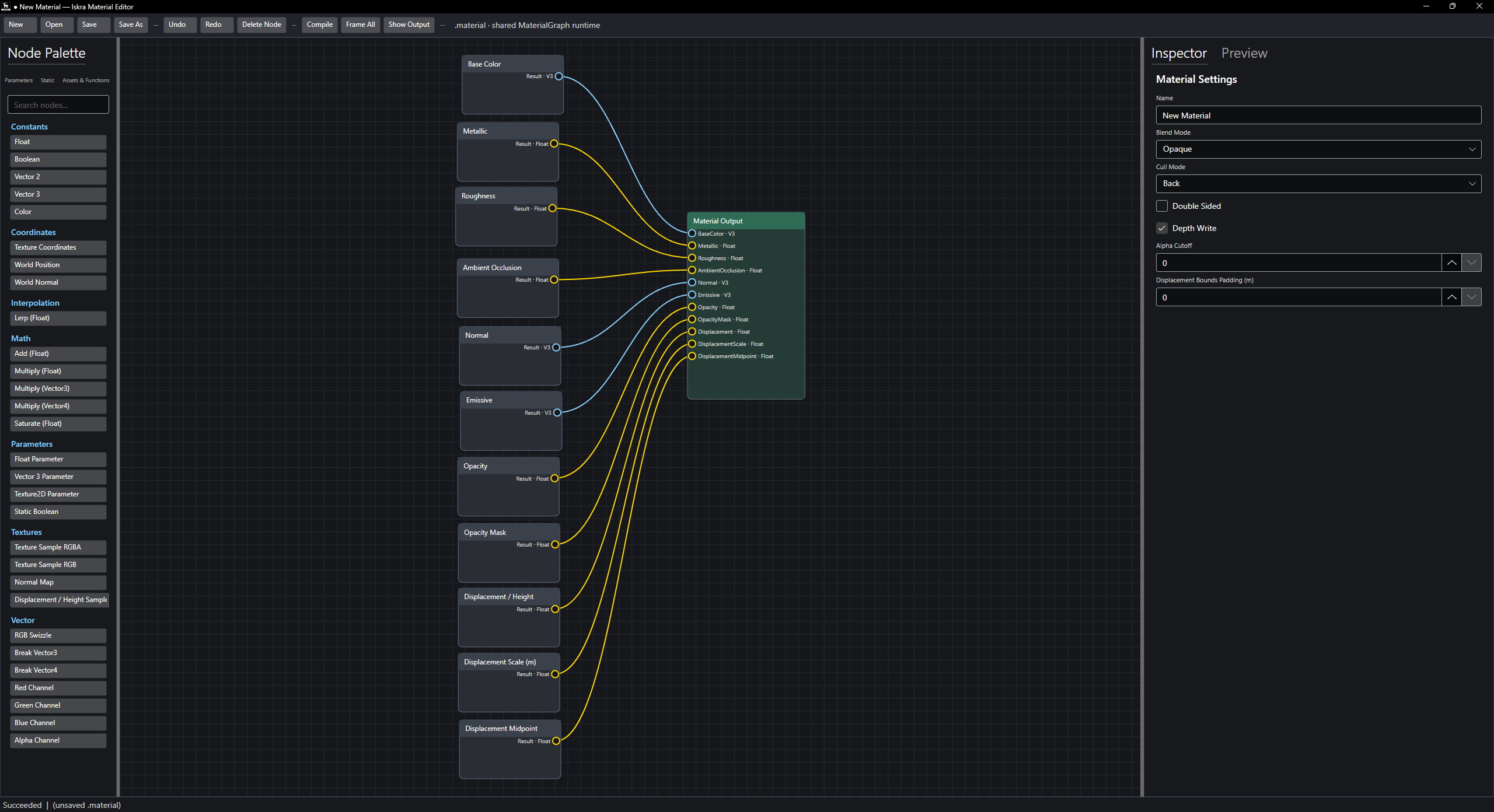
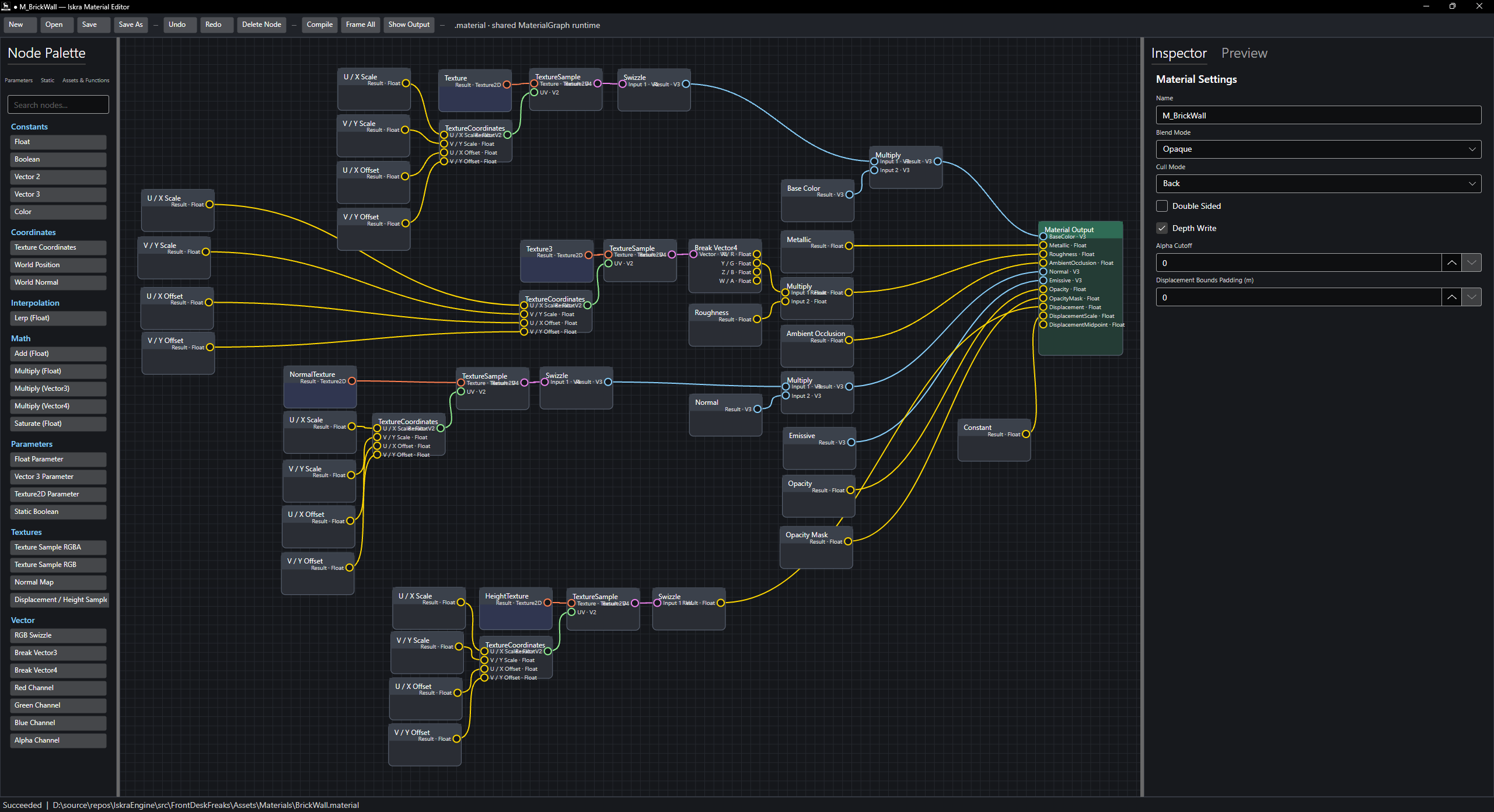
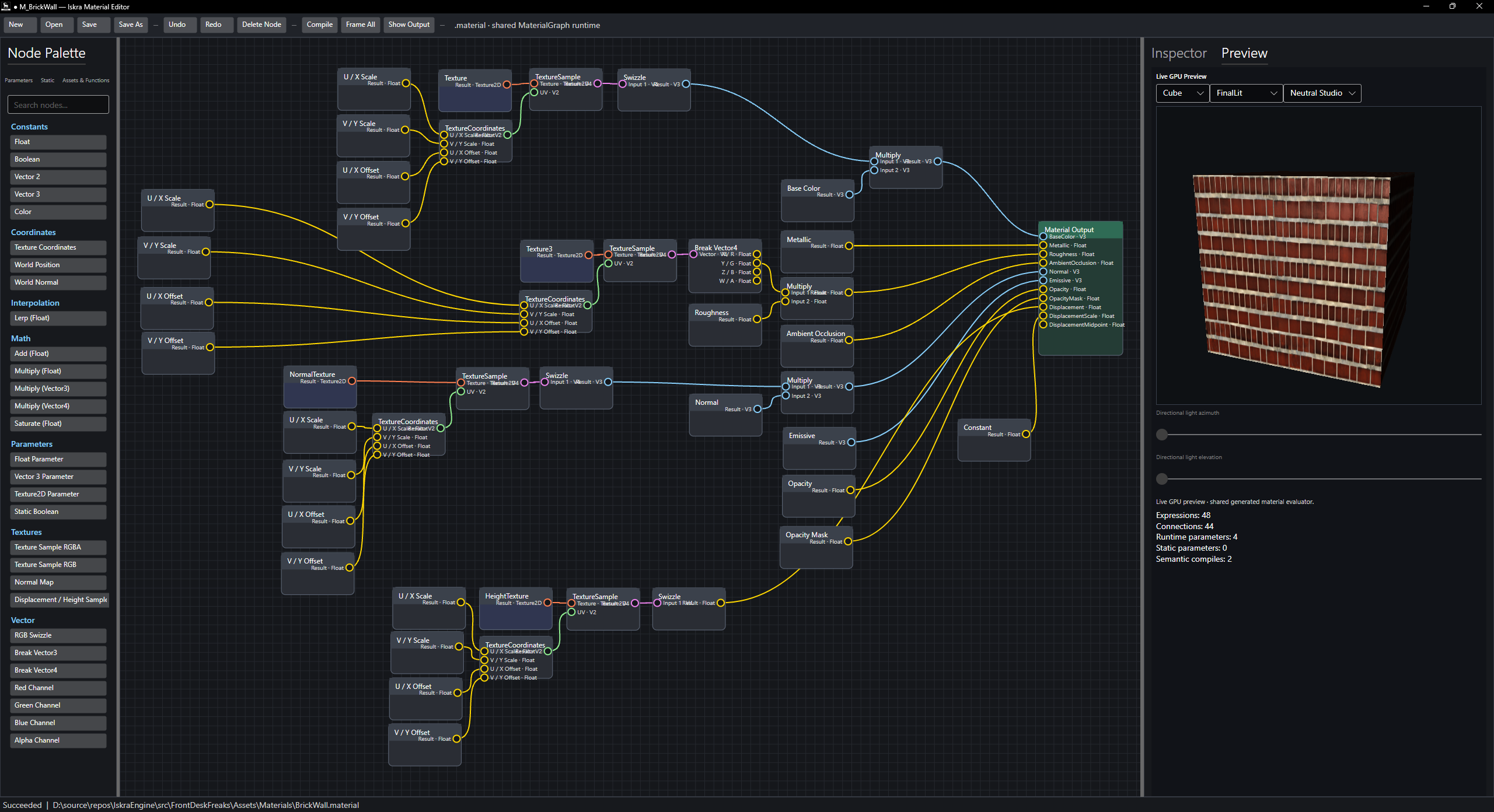
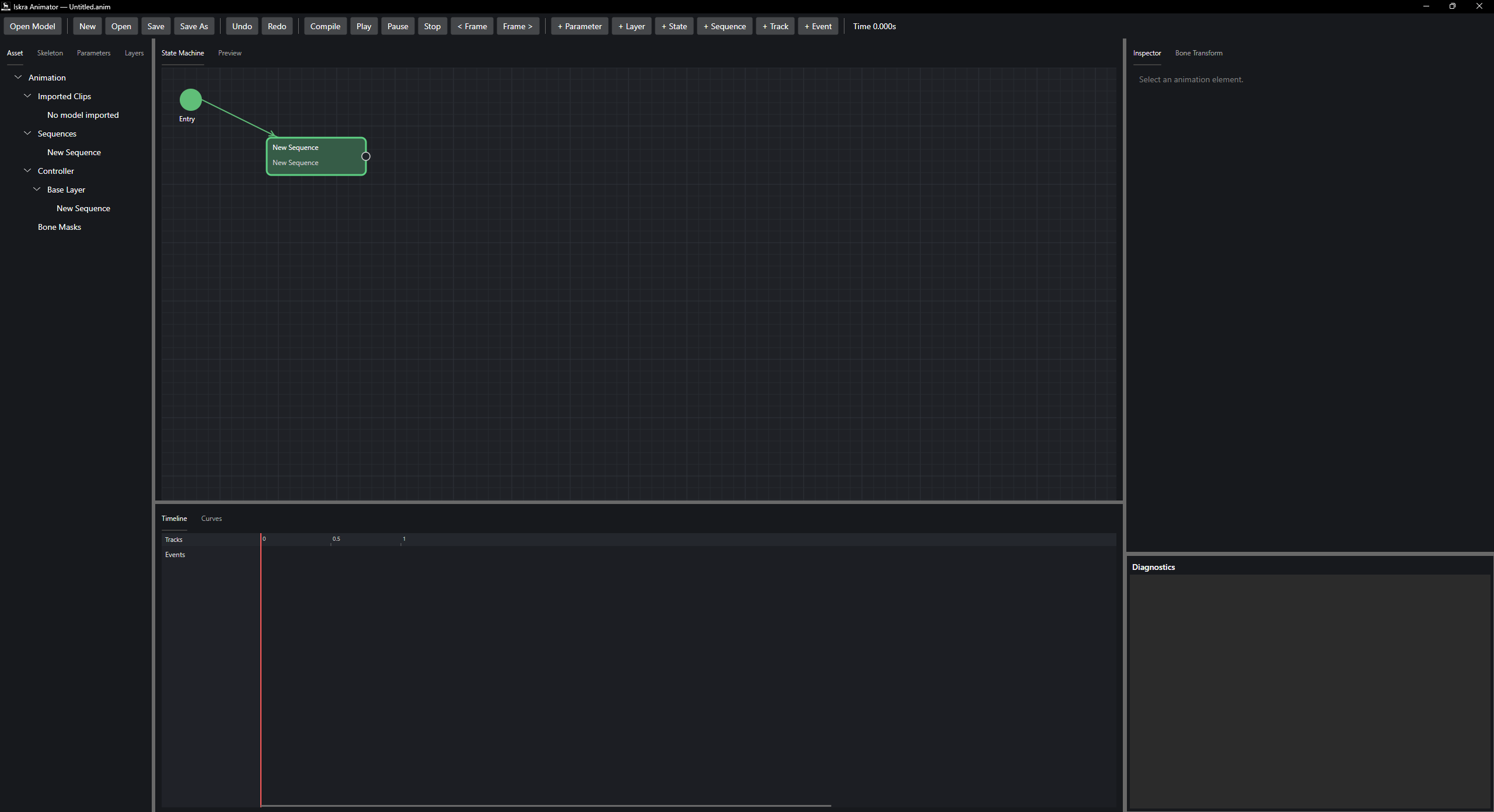
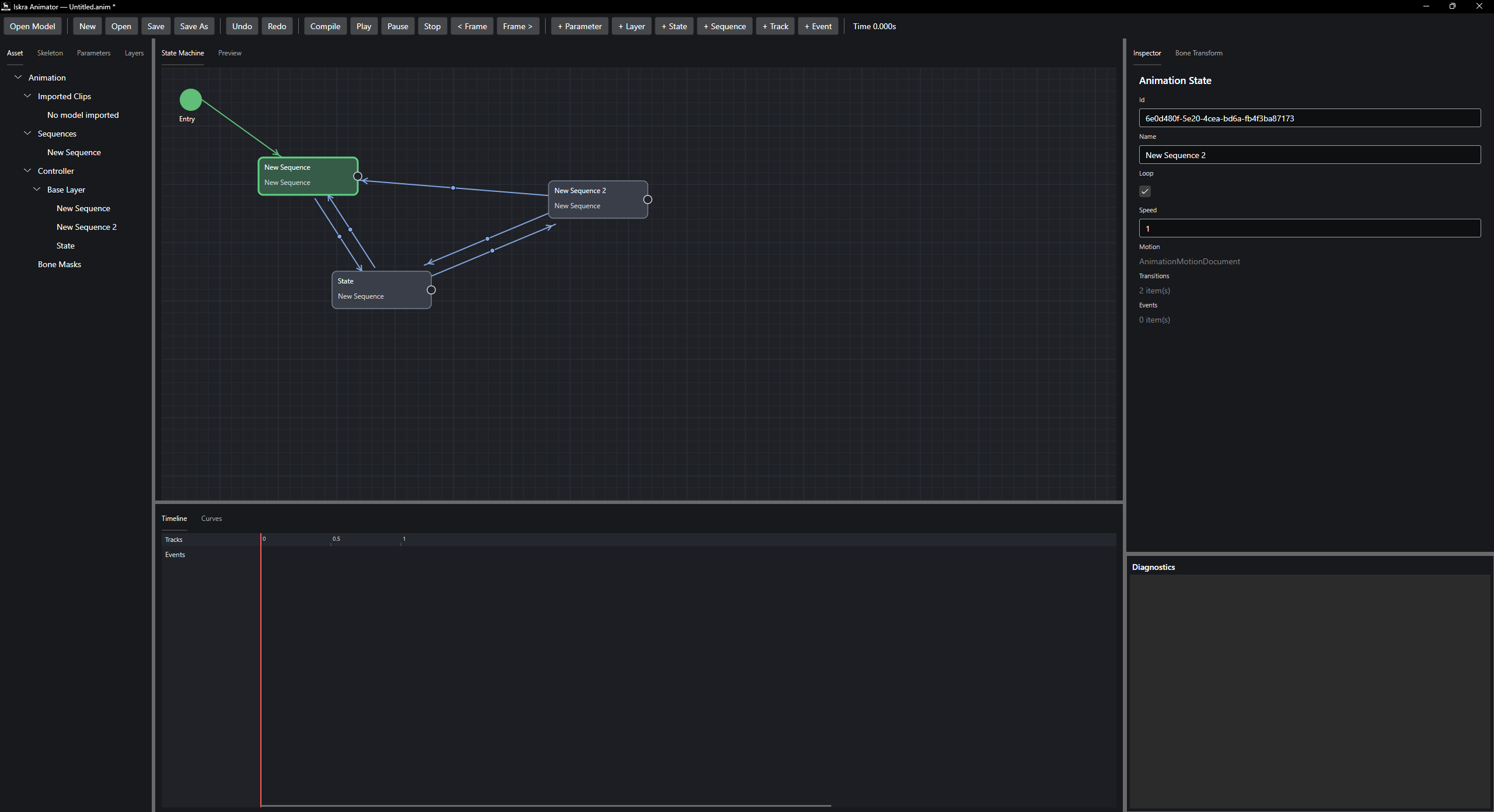
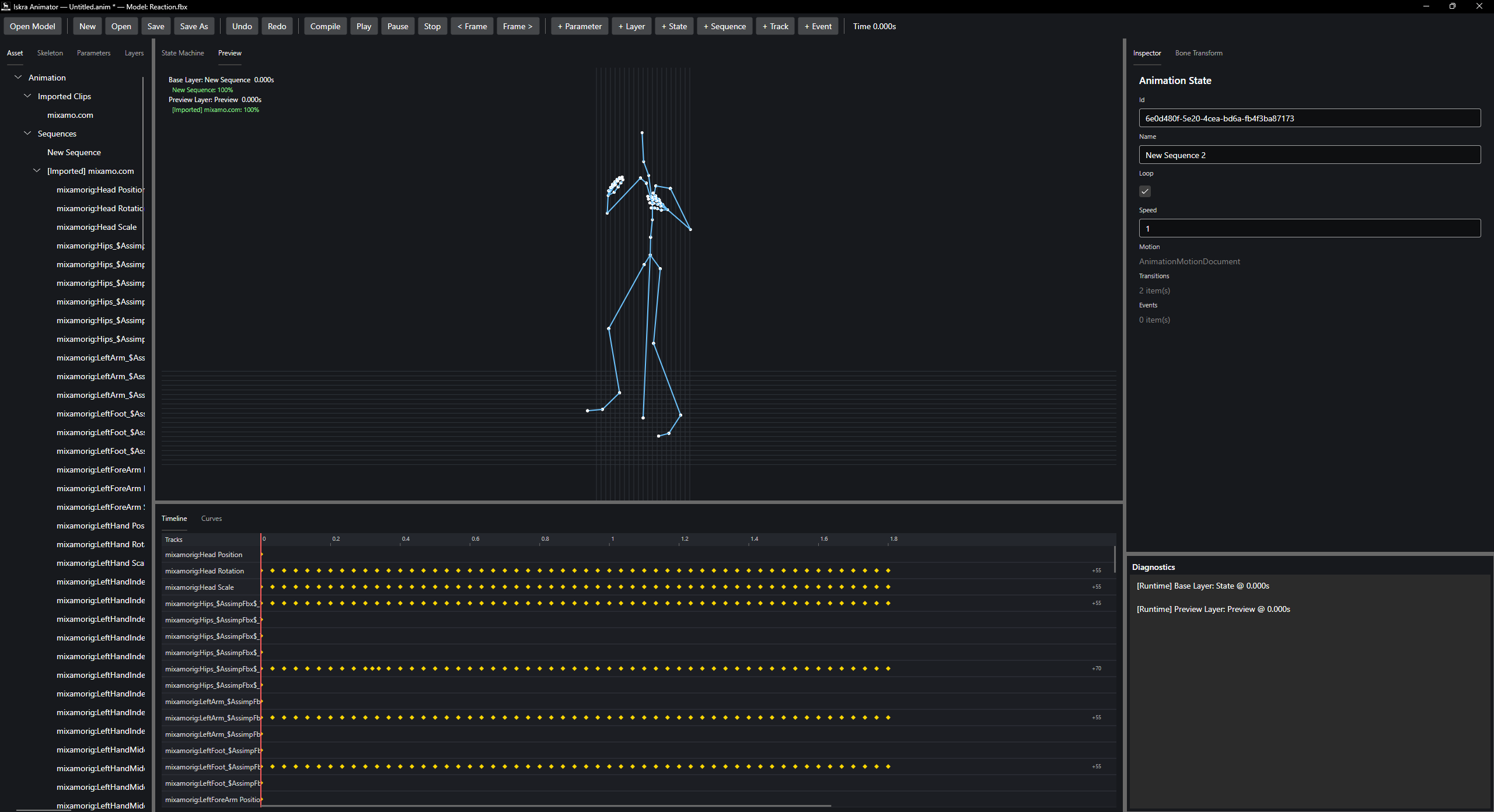
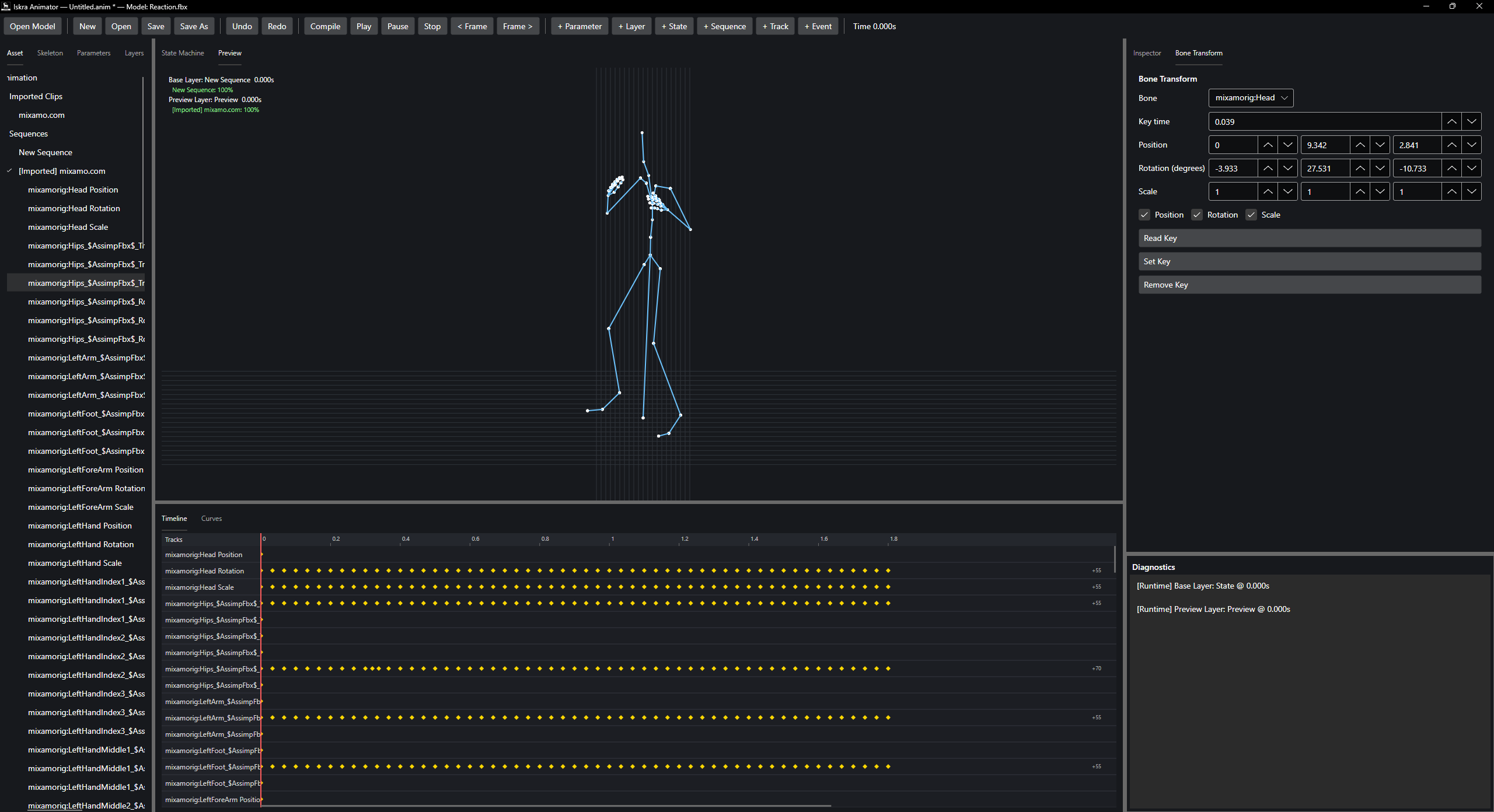
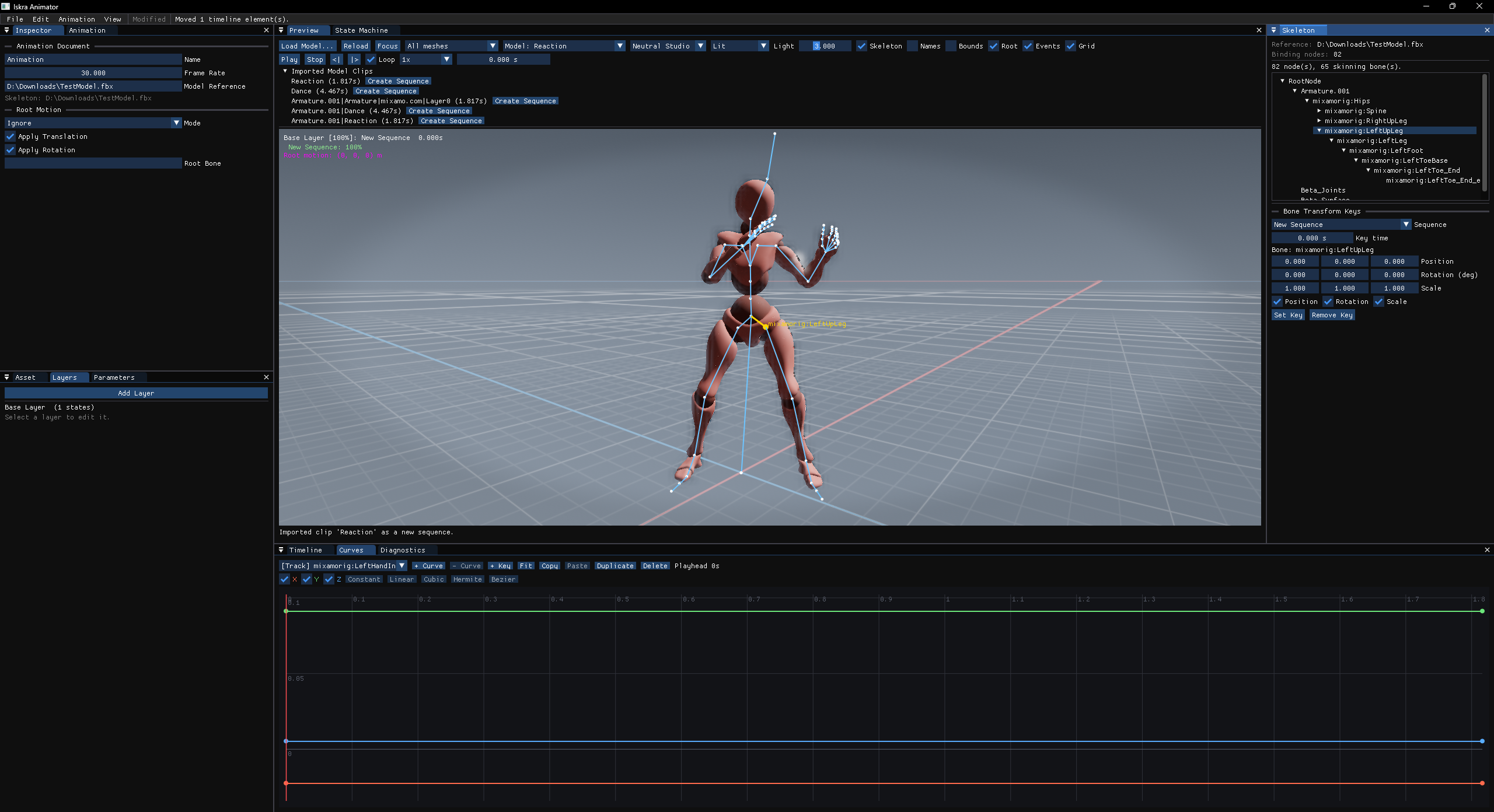
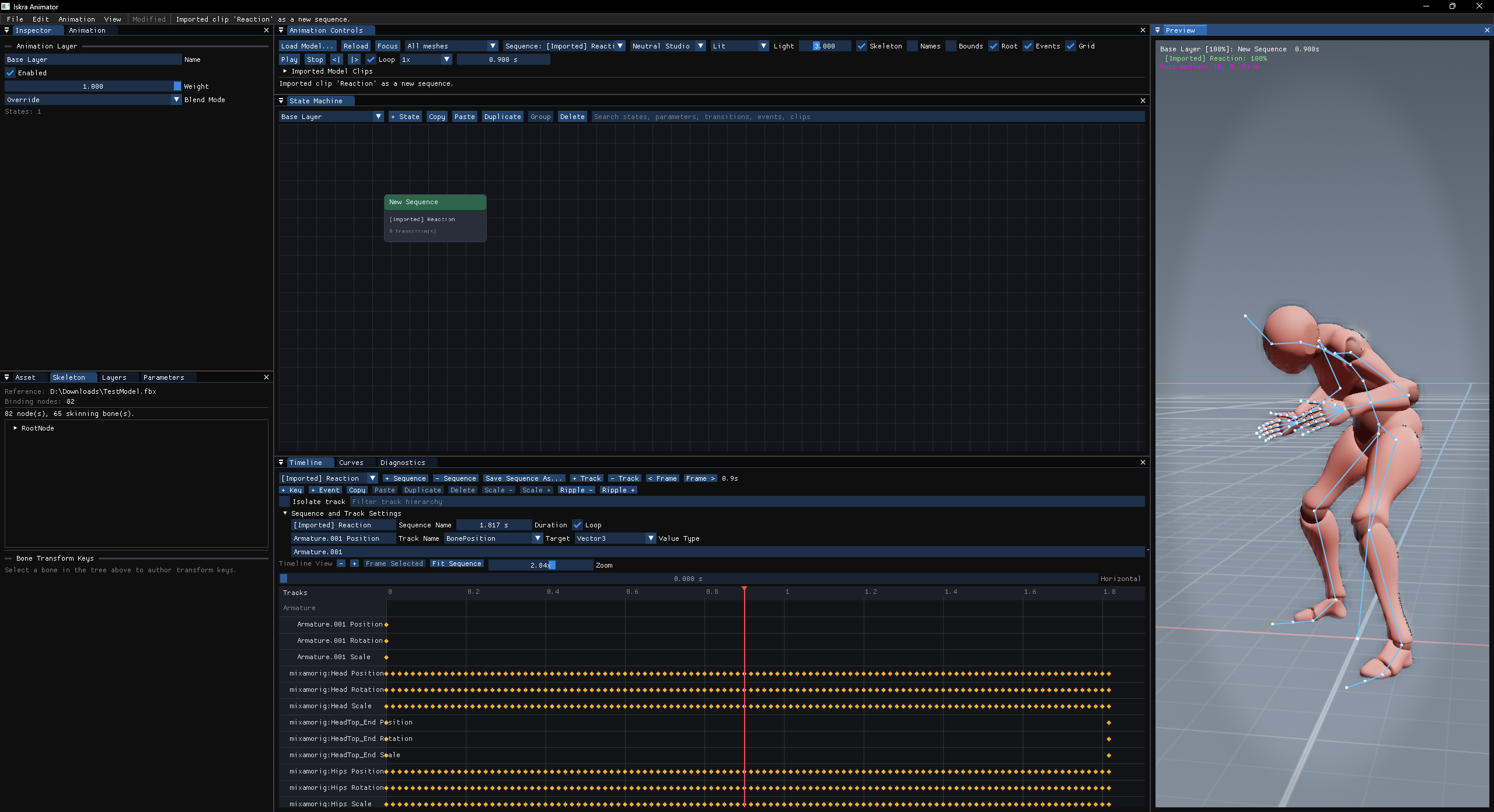
Internal editors for materials, animation, and content workflows, built alongside the engine itself.
Feature Overview
Current engine systems
Iskra Engine is developed in the Evergarden Games repository. The process host, scene runtime, renderer, simulation systems, content pipeline, tools, and networking layer are separate engine modules with explicit ownership and lifecycle rules.
A runtime built as one coherent system
Scene lifecycle, ownership, and core systems
Iskra Engine brings scene management, entities, components, input, timing, animation, audio, UI, saving, and configuration into a single C# and .NET runtime. Its process host coordinates startup, updates, fixed simulation, network ticks, rendering, resizing, and shutdown, while explicit ownership rules keep shared assets, scene resources, native objects, and GPU resources predictable throughout their lifetimes.
Rendering and simulation
Real-time graphics backed by fixed-step gameplay
The renderer uses an OpenGL 4.6 desktop path with deferred opaque rendering, deferred lighting, forward transparency, physically based materials, shadow mapping, image-based lighting, terrain, skeletal animation, particles, and procedural geometry. A broad set of diagnostic views makes it possible to inspect lighting, buffers, collision, occlusion, audio ranges, and other runtime systems directly inside the engine.
Gameplay runs on a fixed-step simulation powered by BepuPhysics, with static, dynamic, and kinematic bodies, common collider shapes, collision and trigger callbacks, raycasts, spatial queries, navigation surfaces, pathfinding agents, and state-machine helpers.
Content without friction
A practical pipeline for assets, iteration, and tools
A shared asset manager handles caching, normalized paths, streaming-friendly handles, and scene-scoped disposal. Iskra Engine imports OBJ, FBX, glTF, and GLB models, supports procedural meshes and runtime-generated materials, and can hot reload shaders, textures, materials, and scene files while the project is running.
- Dedicated asset and build tools
- Separate animation authoring application
- Rendering and scene validation workflows
- Structured logging and profiling hooks
- Runtime metrics and diagnostic overlays
- Automated subsystem and contract tests
Audio, UI, and multiplayer from the start
Production systems built into the engine architecture
The engine includes 2D and spatial 3D audio, attenuation, looping, pitch control, listener and source components, voice capture, and multiplayer voice playback. Its runtime UI is owned by the engine and written in C#, with HTML-based documents, stylesheets, retained layout, bindings, modals, and built-in controls.
Multiplayer is part of the architecture rather than an afterthought. Iskra Engine supports authoritative client-server play, headless dedicated servers, world snapshots, remote-player interpolation, peer-to-peer rollback, late-input correction, deterministic replay and state hashing, voice systems, Steamworks integration, and online-service abstractions.
Designed for modern game development
Iskra Engine is Evergarden Games' production engine. It combines rendering, scene management, physics, animation, audio, UI, content tools, asset management, and multiplayer into a single C# and .NET runtime for developing real-time games.